As Netflix pushes forward with its roughly $83 billion agreement to acquire Warner Bros. Discovery’s studio and streaming assets, including HBO and HBO Max, the deal is increasingly being framed less as a bidding contest and more as a test of the modern regulatory climate surrounding media and technology consolidation.
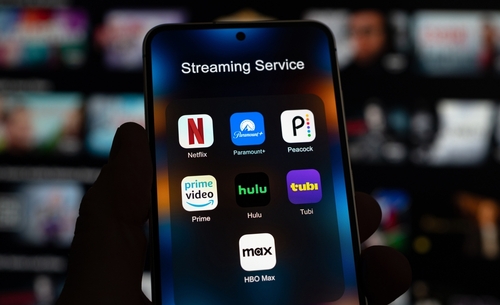
Netflix announced the transaction on Dec. 5, 2025, setting off what has become one of the most closely watched antitrust reviews in years.
Federal regulators at both the Federal Trade Commission (FTC) and the U.S. Department of Justice (DOJ) are expected to subject the deal to intense scrutiny, reflecting a broader enforcement posture toward mergers involving dominant platforms.
Some critics argue that the proposed combination would significantly reshape the streaming landscape, possibly allowing Netflix to manipulate search algorithms and monopolize streaming, raising concerns about competition, consumer choice, and innovation.
The situation has been further complicated by a competing, hostile bid for all of Warner Bros. Discovery — including its cable channels — made Dec. 8, 2025 by Paramount Skydance Corp.
While that bid adds strategic uncertainty, regulatory risk remains the central obstacle facing any transaction involving the company’s assets.
DOJ officials have emphasized that aggressive antitrust enforcement is now a defining feature of federal policy, not an exception.
“This is an important time in antitrust enforcement,” said Gail Slater, assistant attorney general in the DOJ’s Antitrust Division, last August. “Americans are confronted with a new wave of economic and industrial change as technological innovations like AI transform our economy. At the same time, forces of economic consolidation across industries threaten the bottom line for American consumers and workers.
“I firmly believe that vigorous antitrust enforcement can boost our economy, foster innovation, and help protect Americans on pocketbook issues,” she added. “As President Trump said when he nominated me, antitrust can indeed ‘Make America Competitive Again.’”
That posture has led analysts and legal scholars to caution that the fate of the Netflix–Warner Bros. deal may hinge less on its financial logic than on regulators’ willingness to tolerate further consolidation in already concentrated markets.
A Jan. 7 commentary published by the Cato Institute in the Washington Examiner argued that, while regulators should apply a neutral standard, recent history suggests otherwise.
“As regulators analyze the Netflix-Warner Bros. deal, an objective, consumer-focused approach should guide their considerations,” the institute said. “But it might not, especially given the heightened scrutiny of acquisitions by large companies over the past few years.”
History offers several examples of how regulatory skepticism can derail even highly anticipated transactions.
Over the past 15 years, multiple large technology and media deals have been abandoned or blocked after companies projected confidence to shareholders, only to encounter sustained opposition from regulators late in the process.
Among the most prominent cases are Amazon’s failed acquisition of iRobot, Adobe’s abandoned $20 billion bid for Figma, and Comcast’s terminated merger with Time Warner Cable. In each instance, regulatory risk ultimately proved more decisive than initial deal enthusiasm.
As the Netflix–Warner Bros. review unfolds into early 2026, that pattern looms large.
For regulators, the case is shaping up as another test of how far consolidation can go in media and technology markets.
For Netflix and its investors, it is a reminder that in today’s antitrust environment, regulatory judgment — not dealmaking ambition — often has the final word.
Heed the regulator
History shows that regulatory warnings, not courtroom losses, are killing major media and tech mergers.
In fact, a growing number of high-profile media and technology mergers have collapsed in recent years — not because companies lost in court, but because regulators made clear long before final rulings that approval was unlikely.
From Amazon’s abandoned bid for iRobot to Adobe’s failed attempt to buy Figma, companies are increasingly walking away from multibillion-dollar deals once antitrust agencies in the U.S. and Europe signal deep opposition.
The pattern underscores how regulatory pressure alone can be enough to derail transactions, even before formal litigation begins.
In January 2024, for example, Amazon and iRobot terminated their planned $1.4 billion merger after facing scrutiny from both the European Commission (EU) and the FTC. The companies said there was “no path to regulatory approval,” ending the deal before regulators issued a final decision.
European officials argued the acquisition would allow Amazon to restrict or degrade competitors’ access to its online marketplace by favoring iRobot’s Roomba products, while the FTC investigated whether the deal would reduce competition in the robot vacuum market.
A similar dynamic played out months earlier with Adobe and Figma. In December 2023, Adobe abandoned its proposed $20 billion acquisition of the design software firm after concluding it could not secure approval from regulators in the EU and the United Kingdom.
Britain’s Competition and Markets Authority said the deal would harm innovation in software used by most UK digital designers, while EU officials warned it would significantly reduce competition.
In the U.S., the DOJ had signaled it was preparing an antitrust lawsuit following an extensive investigation, pushing Adobe to ultimately walk away before any formal case was filed, paying Figma a $1 billion termination fee.
The phenomenon is not new.
In 2015, Comcast dropped its $42.5 billion bid for Time Warner Cable after more than a year of regulatory review.
The decision came shortly after meetings with federal officials who indicated they were leaning toward blocking the merger. The DOJ raised major competitive concerns, and the Federal Communications Commission also expressed opposition.
At the same time, several prominent companies — including Netflix, Discovery Communications, and Dish Network — publicly criticized the deal.
Comcast and Time Warner Cable abandoned the transaction without a breakup fee after 14 months of effort.
Across these cases, regulators never needed to win in court to stop the deals.
Instead, sustained scrutiny, public opposition from enforcement agencies, and repeated signals that approval was unlikely proved sufficient to convince companies to retreat.
The pattern highlights the increasing power of antitrust regulators to shape corporate strategy through early intervention, effectively ending transactions before judges ever get the chance to weigh in.
Opposition swells
Bipartisan antitrust alarm bells are ringing over the pending Netflix–Warner Bros. deal, and antitrust opposition to major media and technology mergers has increasingly become a bipartisan feature of Washington, D.C., rather than a partisan flashpoint.
This is evident as lawmakers and regulators from both parties warn against consolidation that could entrench dominant market power, reduce consumer choice, and weaken competition.
That climate is now shaping scrutiny of Netflix’s proposed acquisition of Warner Bros. Discovery assets, a deal analysts say would combine the largest global streaming subscriber base with one of the deepest content libraries in Hollywood history.
An analyst at the American Action Forum has said the transaction is likely to face “rigorous investigation” over concerns about monopoly power in streaming, potential price increases for consumers, and diminished competition across the media ecosystem.
Likewise, political attention has only intensified the spotlight. President Donald Trump, for instance, has said he may personally involve himself in the antitrust review.
“There’s no question about it. It could be a problem,” Trump said Dec. 7, 2025 while walking the red carpet at the Kennedy Center Honors in Washington, D.C. While praising Netflix leadership, he added that Netflix has “a very big market share and when they have Warner Bros., you know, that share goes up a lot… so we’ll have to see what happens. I’ll be involved in that decision, too.”
Despite the political overtones, enforcement officials across administrations have emphasized that antitrust scrutiny is grounded in long-standing competition principles rather than ideology.
In an April 2025 speech ahead of opening arguments in the Google Search remedies trial, Deputy Attorney General Todd Blanche underscored the DOJ’s view that unchecked market power harms consumers and competition.
“The court has already concluded that Google is a monopolist,” Blanche said. “As a monopolist, Google uses its market power against the American people… This antitrust case addresses that monopoly power.”
Blanche added that the department’s proposed remedies are designed to ensure that dominant firms “can never again wield such dominance” and cannot prevent rivals “from achieving scale.”
Similar themes have been echoed by other DOJ officials. Assistant AG Slater, speaking in a separate antitrust case involving the Washington Post, said, “When companies abuse their market power to block out and deplatform independent voices and protect legacy media, they harm competition and threaten the free flow of information.”
Slater added that the DOJ’s Antitrust Division will “always defend the principle that the antitrust laws protect free markets, including the marketplace of ideas.”
At the FTC, leadership under both parties has stressed aggressive merger enforcement. FTC Chairman Andrew Ferguson said in May 2025 that guarding against anticompetitive mergers is “one of the commission’s most vital tasks.”
“With fewer competitors and less competitive pressure, consumers may suffer,” Ferguson said, warning of higher prices, lower quality, reduced innovation, and harm to workers when consolidation reduces labor market competition.
Blocking mergers that may “substantially lessen competition” or “tend to create a monopoly,” he said, is essential to protecting the U.S. economy.
The FTC has also continued its aggressive posture in ongoing tech litigation. Earlier this month, FTC Bureau of Competition Director Daniel Guarnera said the agency would appeal a federal court ruling favoring Meta Platforms, stating that “the U.S. economy thrives when competition can flourish,” and that the commission would continue fighting to ensure competition benefits consumers and businesses alike.
On Capitol Hill, skepticism toward the Netflix–Warner Bros. deal spans party lines.
U.S. Sen. Mike Lee (R-UT), chairman of the Senate Judiciary Subcommittee on Antitrust, warned in a Jan. 22 letter that the merger could enable misuse of competitively sensitive information during the review process and function as a so-called “killer non-acquisition.”
“This potential transaction, if it were to materialize, would raise serious competition questions — perhaps more so than any transaction I’ve seen in about a decade,” Lee said. “When Netflix has real competition, viewers and artists win.”
U.S. Sen. Tim Scott (R-SC) echoed similar concerns in a Dec. 12, 2025 letter, writing that Netflix’s agreement to buy Warner Bros. assets “raises the prospect of significant antitrust problems in streaming and for the movie industry more broadly” and warrants “rigorous antitrust review” and, if necessary, a lawsuit to block the deal.
Democrats have raised similar objections, with U.S. Sen. Elizabeth Warren (D-MA) calling the proposal “an anti-monopoly nightmare.”
Warren also warned it could give one company control of nearly half the streaming market, leading to higher prices, fewer choices and risks to American workers.
Warren has also criticized the politicization of antitrust enforcement, arguing reviews must be conducted “fairly and transparently.”
Across agencies and parties, concerns about the Netflix–Warner Bros. deal have consistently centered on market concentration, consumer choice, labor impacts, and the potential chilling effect on innovation — signaling that, regardless of political rhetoric, antitrust skepticism toward consolidation has become a rare point of bipartisan consensus.
Focus on shareholders
The proposed Netflix–Warner Bros. deal is putting governance and disclosure under the regulatory microscope.
When Netflix announced its agreement last December to acquire Warner Bros. Discovery’s studio and streaming assets, the company framed the transaction as a clear win for shareholders — promising growth, efficiency, and earnings upside.
“By offering members a wider selection of quality series and films, Netflix expects to attract and retain more members, drive more engagement and generate incremental revenue and operating income,” Netflix said in its deal announcement.
The company added that it expects to realize “at least $2–3 billion of cost savings per year by the third year” and that the transaction would be “accretive to GAAP earnings per share by year two.”
But as the proposed merger faces extended regulatory scrutiny and a rival hostile bid from Paramount Skydance, investor focus is increasingly shifting away from headline synergies and toward governance, disclosure, and how boards assess regulatory risk.
The competing offers have put Warner Bros. Discovery directors at the center of a high-stakes test of fiduciary duty, because even despite having multiple bidders, the deal may not bode well for shareholders, say some sources, who point out that boards can become overly committed to a signed deal even as circumstances change.
To ensure the best outcome for shareholders, some suggest that Warner Bros. directors not be glued to the initial attachment they may have formed to the Netflix option, and stay focused on their duty to maximize value.
And that entails fully and objectively exploring what Paramount has offered and if it possibly maximizes shareholder value better than the proposed Netflix deal.
Cato Institute fellows pointed out in their commentary that antitrust laws are designed to ensure that consumers benefit from a competitive marketplace, and as regulators and the public debate the proposed acquisition of Warner Bros., they should focus on whether such a merger can benefit the public.
The debate comes as regulators continue to scrutinize large media and technology mergers more aggressively, often extending review timelines well beyond what companies initially forecast.
In past transactions, prolonged reviews or outright opposition have eroded shareholder value, triggered costly termination fees, and led to layoffs or restructuring when deals collapsed or were delayed.
As the Netflix–Warner Bros. process stretches into 2026, those risks are becoming harder for investors to ignore.
For investors, the central issue is often not which proposal appears most attractive at announcement, but how realistically regulatory risk is assessed and disclosed.
A U.S. Senate Judiciary antitrust subcommittee hearing is scheduled for Feb. 3 to examine the competitive impact of the proposed Netflix-Warner Bros. transaction.